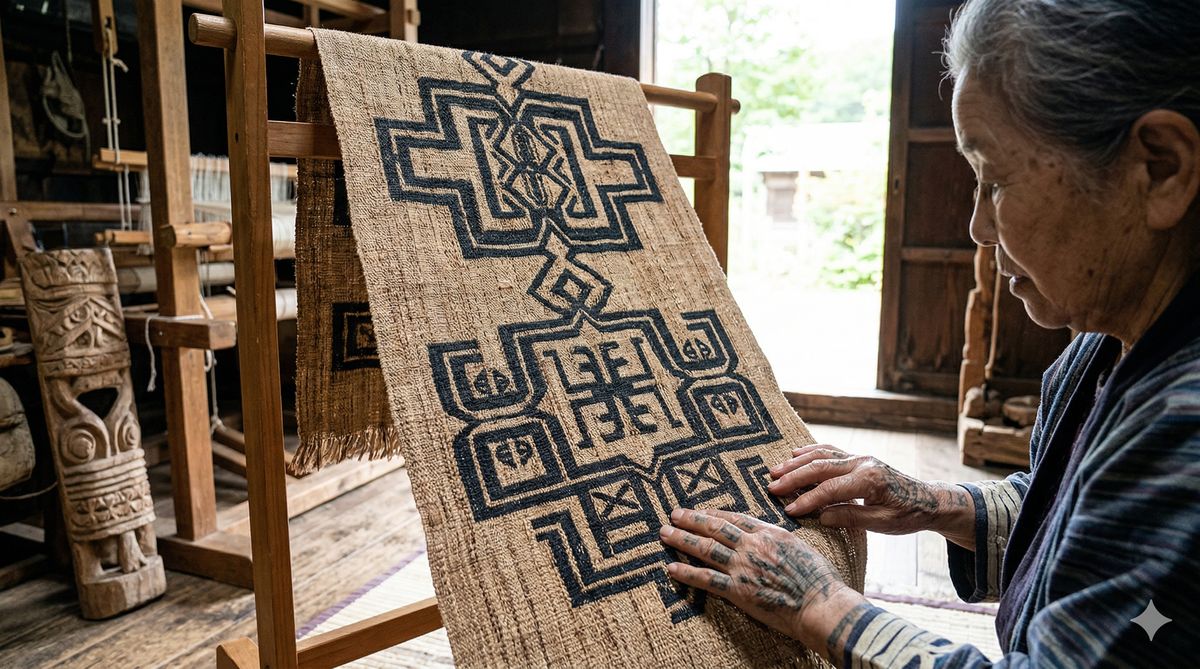
 Textiles
A sacred Ainu woven cloth from Hokkaido, crafted from elm tree bark fibers. Known for its bold geometric patterns unique to indigenous Ainu culture.
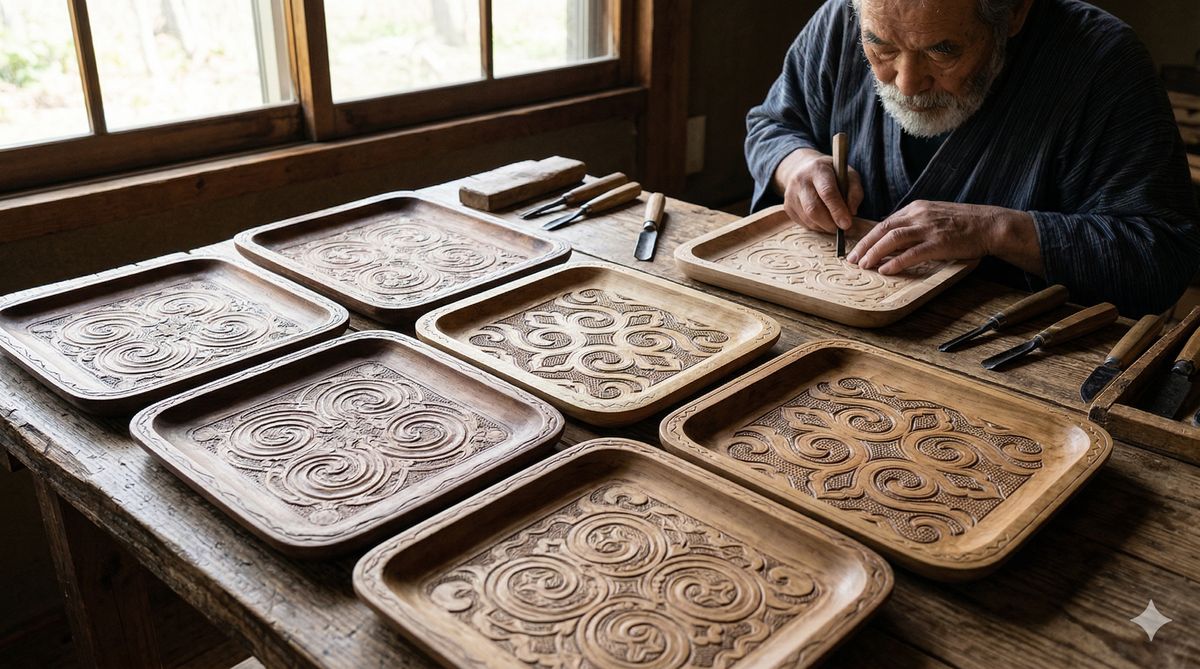 Woodcraft & Bamboocraft
Traditional Ainu carved wooden trays from Hokkaido's Biratori Town, featuring intricate swirling patterns symbolic of Ainu spiritual beliefs.
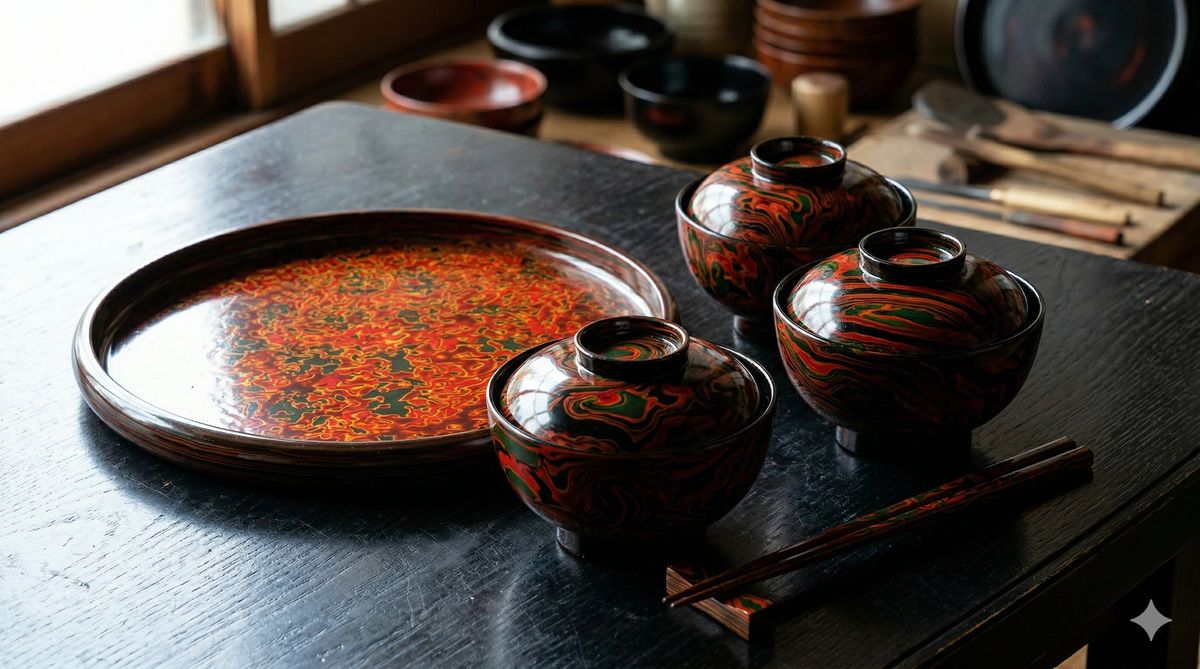 Lacquerware
Striking lacquerware from Aomori featuring vivid marbled patterns created by layering and grinding multiple lacquer coats. Each piece has a one-of-a-kind swirling design.
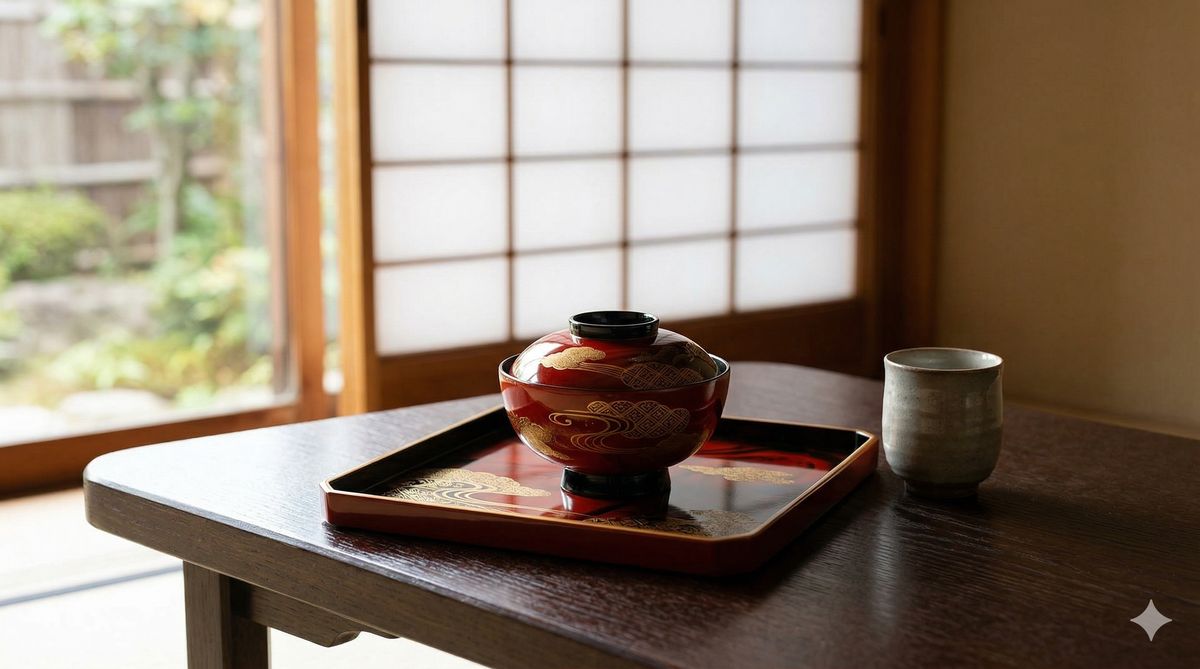 Lacquerware
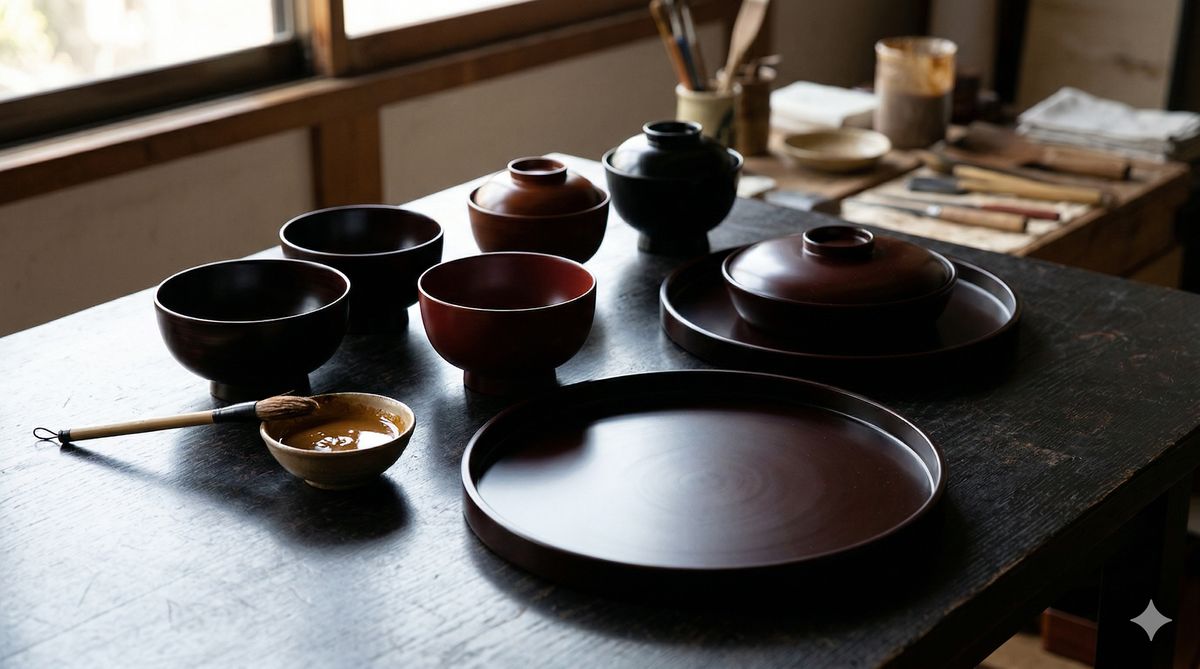
Elegant lacquerware from Iwate Prefecture rooted in 12th-century Heian aesthetics, featuring gold makie decoration on deep red and black grounds.
 Lacquerware
Pure and understated lacquerware from Iwate using Japan's finest domestic urushi sap. Prized for its natural warmth, durability, and honest beauty.
 Woodcraft & Bamboocraft
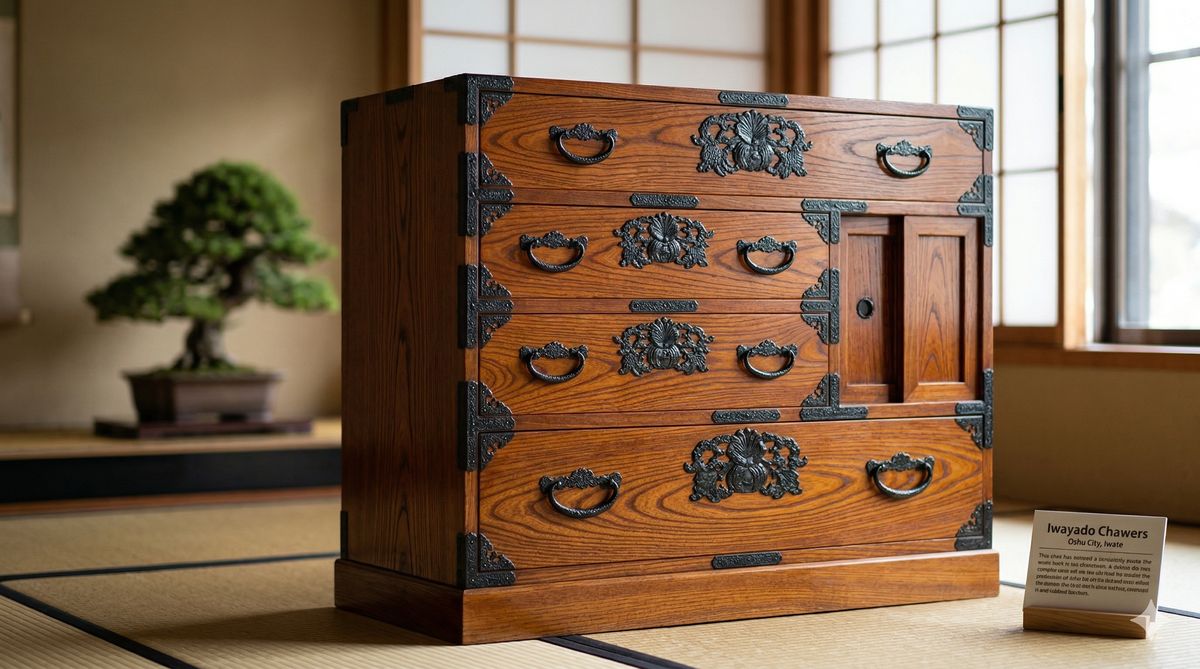
Handcrafted wooden tansu chests from Oshu City, Iwate, renowned for elaborate ironwork fittings and durable zelkova or Japanese cedar construction.
 Metalwork
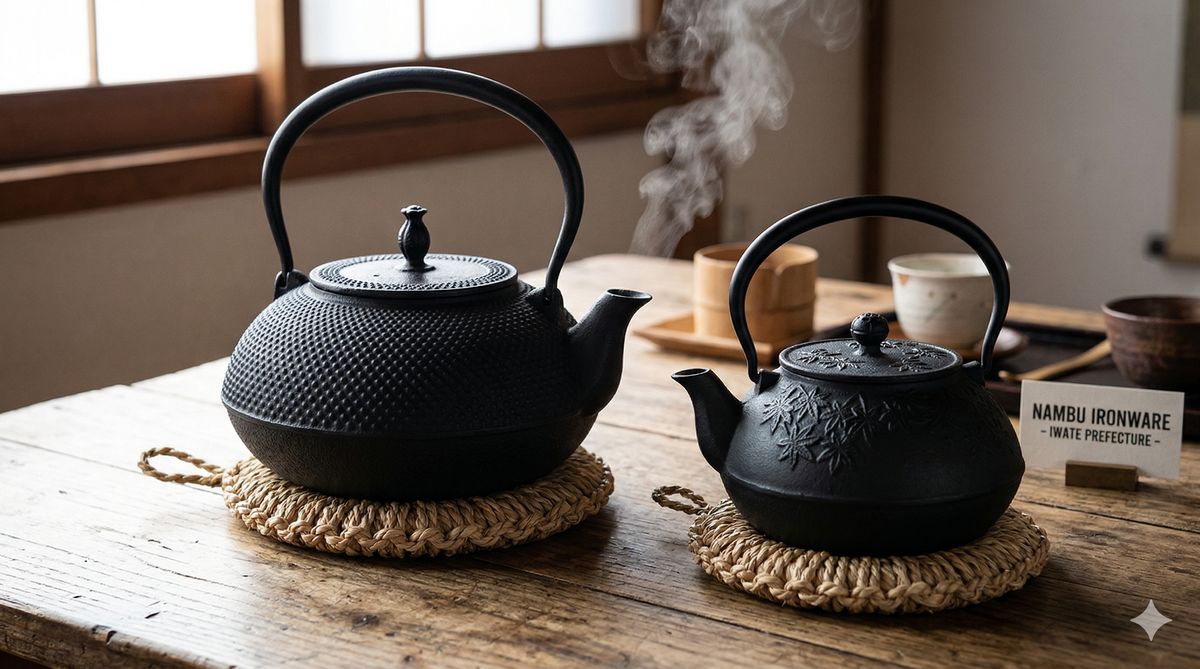
Iconic cast-iron kettles and teapots from Iwate Prefecture, beloved worldwide for superior heat retention and mineral-enriching properties. A symbol of Japanese craftsmanship.
 Lacquerware
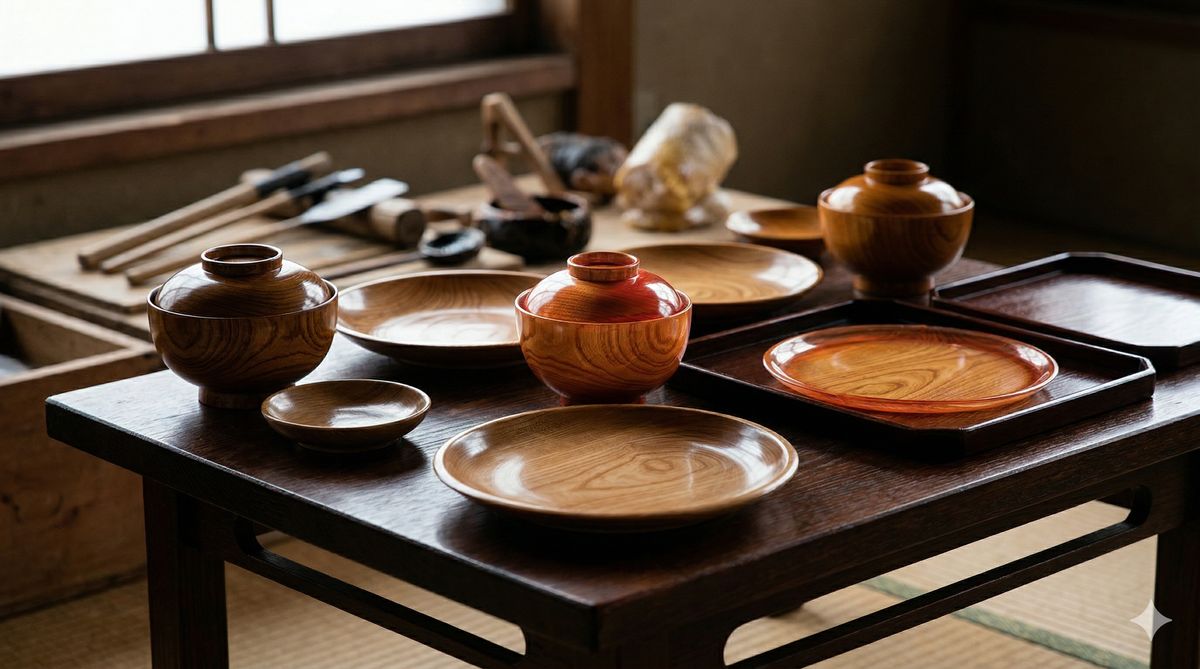
Delicate lacquerware from Oshu City, Miyagi, known for its transparent coating that lets the natural wood grain show through in an elegant technique called mokume.
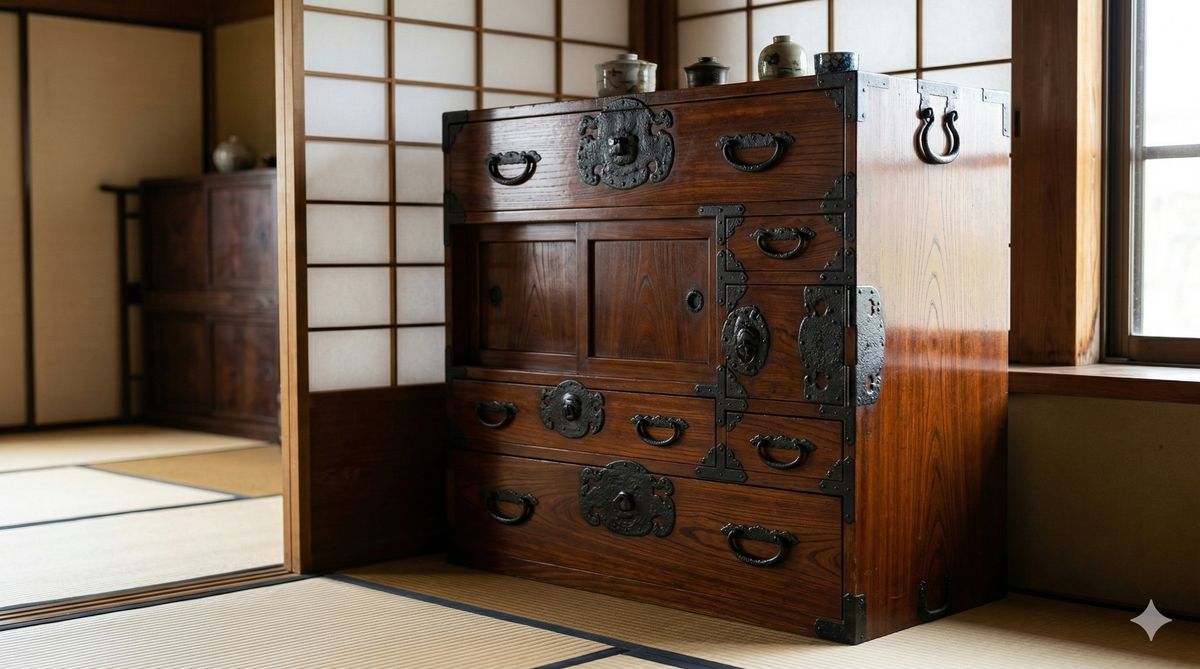 Woodcraft & Bamboocraft
Stately wooden tansu from Sendai, Miyagi, distinguished by bold iron hardware and rich zelkova wood finish. A classic of samurai-era Japanese furniture.
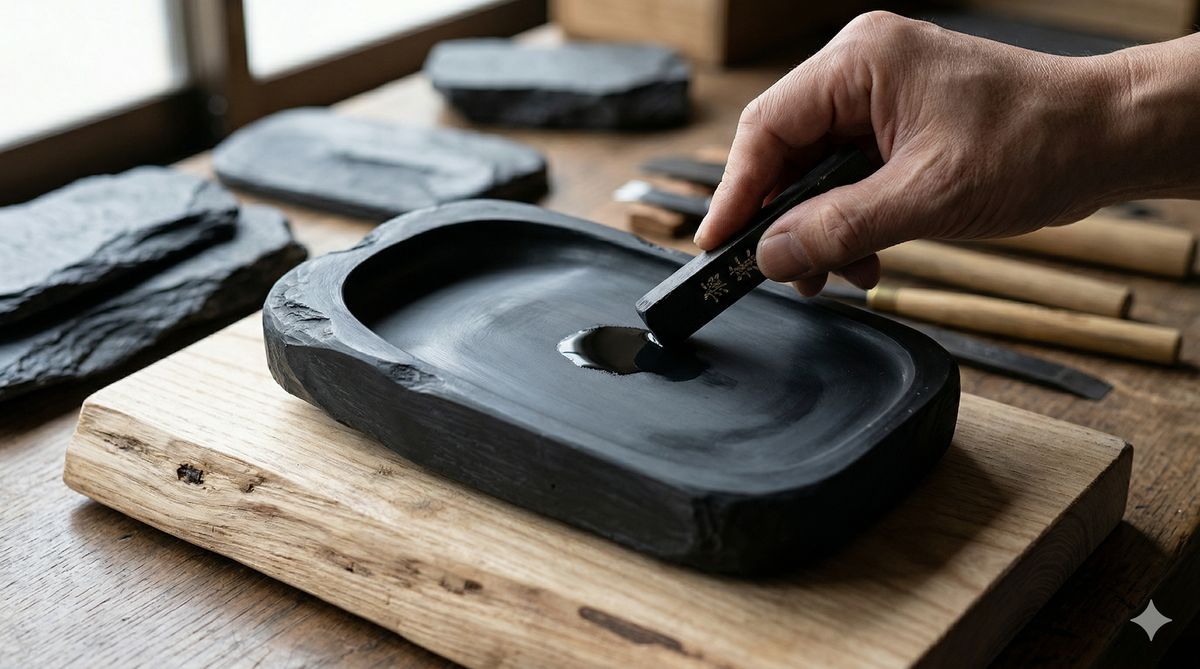 Stationery & Writing
Premium natural inkstones quarried from Ishinomaki, Miyagi, crafted from rare black slate prized by calligraphers for its smooth grinding surface and ink quality.
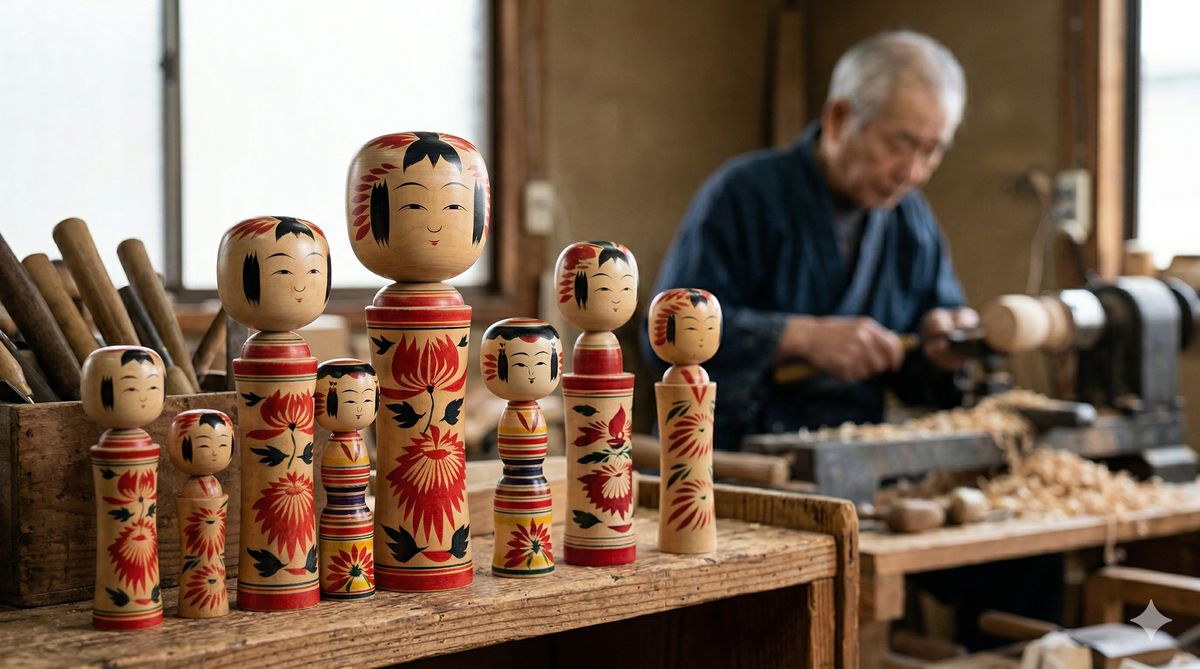 Dolls & Kokeshi
Charming hand-turned wooden dolls from Miyagi's hot spring towns, each style unique to its region. These simple cylindrical figures have delighted collectors for centuries.
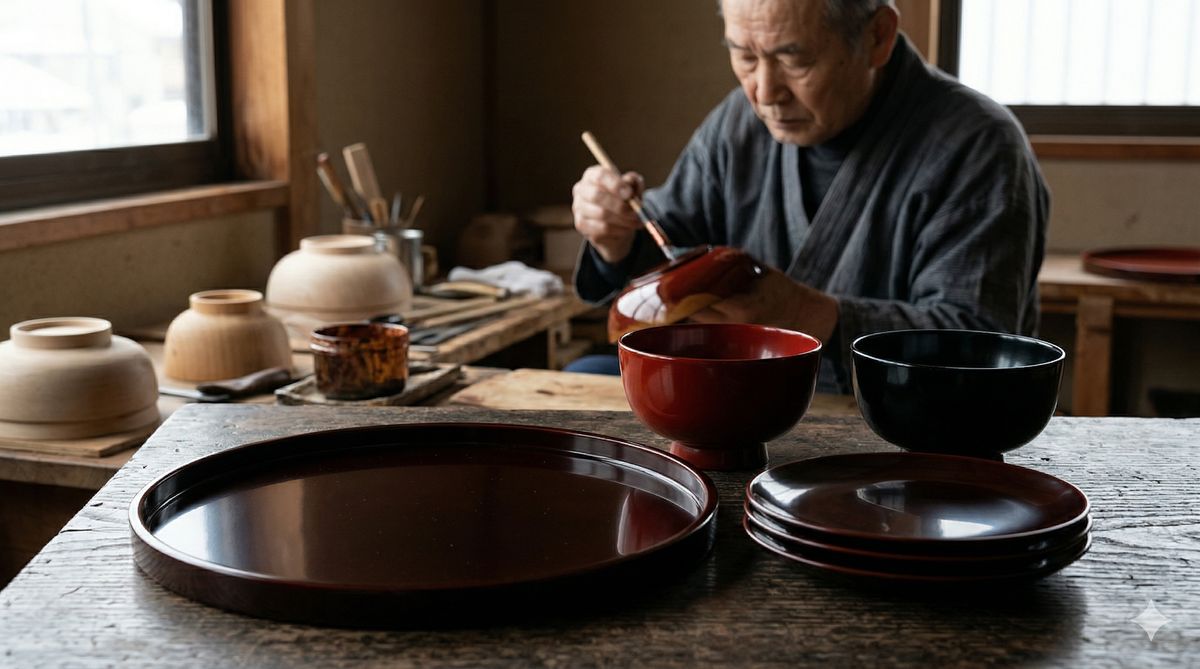 Lacquerware
Refined lacquerware from Yuzawa, Akita with over 600 years of history, known for painstaking layers of urushi producing richly deep and lustrous finishes.
 Woodcraft & Bamboocraft
Unique craft from Kakunodate, Akita using wild cherry tree bark to create tea caddies and small items with a distinctive warm luster found nowhere else in the world.
 Woodcraft & Bamboocraft
Graceful bentwood containers from Odate, Akita, steam-bent from thin Akita cedar and celebrated for naturally absorbing moisture, keeping rice perfectly fresh.
 Woodcraft & Bamboocraft
Traditional cooperage from Akita using prized Akita cedar, crafting sake barrels, rice containers, and bath buckets with a fresh fragrance and tight craftsmanship.
 Textiles
Luxurious hand-woven silk from Yamagata's置賜 region, produced in three distinct varieties including Yonezawa, Nagaigori, and Shirataka weaves of exceptional quality.
 Textiles
Rare plant-fiber textile from the Tsuruoka and Murakami border region, woven from linden tree bark in a tradition over 1,000 years old. Prized for its cool texture.
 Metalwork
Fine cast-iron and bronze craft from Yamagata City with over 1,000 years of history, producing iron kettles, vases, and decorative pieces of refined elegance.
 Buddhist Altars & Fittings
Intricately crafted Buddhist home altars from Yamagata, combining woodwork, lacquer, gold leaf, and metalwork in elaborate hand-built religious furnishings.
 Other Crafts
Masterfully crafted Japanese chess pieces from Tendo, Yamagata, which produces over 90% of Japan's shogi pieces using polished boxwood and hand-brushed characters.
 Textiles
Ancient ramie fiber textile from Showa Village, Fukushima, where villagers cultivate, spin, and weave the plant in a tradition unchanged for over 1,500 years.
 Ceramics
Distinctive pottery from Fukushima featuring a blue-gray glaze that crackles beautifully and a running-horse motif symbolizing the local Soma domain heritage.
 Ceramics
Versatile ceramics from Aizumisato, Fukushima, spanning both earthenware and porcelain traditions over 400 years, from rustic folk dishes to refined painted wares.
 Lacquerware
One of Japan's great lacquerware traditions from Fukushima, featuring bold makie decoration and rich red and black bases with over 400 years of continuous production.
 Woodcraft & Bamboocraft
Handwoven baskets from Mishima, Fukushima, crafted from wisteria, walnut, and cherry bark in a centuries-old mountain tradition producing sturdy and beautiful containers.
 Textiles
UNESCO-listed hand-woven silk from Yuki, Ibaraki, produced using hand-spun threads and kasuri tie-dyeing for over 2,000 years. The pinnacle of Japanese silk weaving.
 Ceramics
Free-spirited contemporary ceramics from Kasama, Ibaraki, with 300 years of history and a thriving community of independent potters making uniquely expressive tableware.
 Stonecraft
Handcrafted granite stone lanterns from Sakuragawa, Ibaraki, carved from local Makabe granite and used in traditional Japanese gardens and shrine precincts.
 Ceramics
Beloved folk pottery from Tochigi made famous by master Shoji Hamada, known for earthy glazes and robust forms that inspired the worldwide mingei folk art movement.
 Textiles
Traditional ikat-dyed silk and cotton fabric from Isesaki, Gunma, featuring intricate resist-dyed kasuri patterns in a craft active since the Edo period.
 Textiles
Magnificent silk brocade from Kiryu, Gunma, rivaling Kyoto's Nishijin in quality and variety. Produces luxurious kimono fabric and obi sashes for over 1,300 years.
 Textiles
Vibrant printed silk from Chichibu, Saitama, beloved in the Taisho and Showa eras for bold graphic patterns. Now enjoying a major revival among modern fashion lovers.
 Other Textile Products
Traditional Japanese split-toe tabi foot coverings from Gyoda, Saitama, the nation's leading production center making tabi for kimono, martial arts, and stage performance.
 Woodcraft & Bamboocraft
Lightweight yet fire-resistant paulownia wood chests from Kasukabe, Saitama, traditionally used to store kimonos and valuables. Prized for humidity regulation and beauty.
 Dolls & Kokeshi
Exquisite Edo-period dolls with fabric tucked into grooves carved into a wooden body, producing beautifully detailed figures used as festival decorations and gifts.
 Dolls & Kokeshi
Celebrated festival dolls from Iwatsuki, Saitama, including hina dolls and samurai dolls crafted with extraordinary detail by artisans in Japan's top doll-making district.
 Metalwork
Premium hand-forged craft tools from Chiba Prefecture, made by skilled smiths combining traditional Japanese blade-making techniques with modern functional design.
 Other Crafts
Graceful round fans from Tateyama, Chiba, crafted with a distinctive three-pronged bamboo handle unique to this tradition. A cool and colorful symbol of Japanese summer.
 Textiles
Rare silk pongee woven in western Tokyo using kasuri ikat techniques, producing subtle geometric patterns in earthy tones prized for understated kimono elegance.
 Textiles
Vivid plant-dyed silk from remote Hachijo Island, Tokyo, in three signature colors — yellow, brown, and black — dyed from island plants over a 400-year tradition.
 Textiles
Classic silk and blended weaving from Hachioji, Tokyo, spanning kimono, haori, and hakama fabrics in sophisticated patterns with over 1,300 years of regional history.
Traditional pour-dye technique from Tokyo used to dye cotton tenugui and yukata fabric in vivid patterns, with bold colors penetrating both sides of the cloth simultaneously.
 Dyed Fabrics
Refined solid-color fabric dyeing from Tokyo used to create perfectly even, deep hues on kimono cloth. Valued for its pure tone quality and technical precision.
 Dyed Fabrics
Intricate stencil-dyed kimono fabric from Tokyo with thousands of tiny patterns per square inch, originally worn by samurai as a subtle mark of refinement and status.
 Dyed Fabrics
Richly detailed hand-painted kimono fabric from Tokyo using resist-paste and natural dyes. Blends Kyoto tradition with a bolder, Edo-period aesthetic unique to Tokyo.
 Woodcraft & Bamboocraft
Handcrafted Japanese fishing rods from Tokyo made from multiple species of natural bamboo, renowned among anglers worldwide for their sensitivity and elegant flexibility.
 Woodcraft & Bamboocraft
Precision-jointed wooden furniture from Tokyo using no nails, only interlocking wood joints. Edo Sashimono produces dressers, shelves, and tea ceremony furniture of breathtaking craftsmanship.
 Metalwork
Unique alloy metalwork from Tokyo using antimony to cast highly detailed figurines, accessories, and decorative objects with a fine silvery surface unlike any other craft.
 Metalwork
Refined silversmithing from Tokyo producing tea sets, sake vessels, flower vases, and decorative ornaments with fluid lines and exceptional surface detail by master silversmiths.
 Dolls & Kokeshi
A Tokyo padded-relief art form where layers of fabric and wadding create vivid three-dimensional images on battledores and fans.
Exquisitely crafted Tokyo festival dolls displayed for Girls' Day and Boys' Day, including ornate Hina dolls and samurai figurines in miniature armor.
Meticulously hand-engraved personal stamps crafted in Tokyo, used for official documents and artworks, blending calligraphic art with fine craftsmanship.
A refined Tokyo craft of mounting paintings and calligraphy onto hanging scrolls, folding screens, and fusuma panels using traditional adhesive techniques.
Handcrafted Japanese zither instruments made in Tokyo, prized by musicians for their resonant paulownia wood bodies and precise string arrangement.
Traditional three-stringed lutes crafted by Tokyo artisans, essential to kabuki, rakugo, and geisha performances, made from premium wood and cat or dog skin.
Luxurious Tokyo accessories and ornaments crafted from hawksbill turtle shell, shaped by heat and polished to a warm amber glow.
Patterned washi paper from Tokyo stamped with intricate cloud-mica designs, traditionally used to adorn fusuma sliding doors, walls, and folding screens.
Stunning Tokyo cut glassware featuring sharp geometric patterns wheel-cut into deep-colored crystal, celebrated for its precise craftsmanship and vivid brilliance.
Traditional Tokyo woodblock prints continuing the ukiyo-e legacy, hand-carved and hand-printed using water-based pigments on washi paper.
Handblown Tokyo glassware with a warm, slightly bubbly quality that evokes Edo-period craftsmanship, used for tableware and decorative vessels.
Kanagawa lacquerware where bold floral and geometric motifs are carved into wood before layering rich red and black urushi lacquer, a 700-year tradition.
Elegant lacquerware from Odawara, Kanagawa, known for its translucent wood-grain finish that highlights the natural beauty of the base timber.
Intricate Hakone wooden mosaic craft assembling dozens of differently colored wood species into mesmerizing geometric patterns used on puzzle boxes and furniture.
Fine Niigata silk pongee woven from hand-reeled threads in the snowbound Uonuma region, producing supple kimono fabric with a distinctive natural sheen.
A UNESCO-listed Niigata ramie crepe woven in winter snow country, prized for its crisp crinkled texture that feels cool and refreshing in summer.
A rustic Niigata silk fabric hand-spun from raw silk cocoons in the snow country of Uonuma, valued for its earthy warmth and subtle irregular texture.
An ultra-fine Niigata silk kimono fabric woven with twisted threads in the Uonuma snow highlands, producing a lightweight, crisp drape with quiet elegance.
Niigata resist-dyed ikat weaving from Tokamachi producing kimono fabric with blurred, cloud-like indigo patterns, a hallmark of Japanese snow-country textile culture.
A gossamer Niigata silk crepe from Tokamachi woven with tightly twisted threads to create a delicately crinkled, breathable summer kimono fabric.
Niigata stoneware from Sado Island fired with iron-rich mumyoi clay, creating deep rust-red vessels that harden with use and develop a personal patina.
Niigata carved-wood lacquerware from Murakami where artisans carve bold patterns into wood before applying multiple layers of vermilion urushi lacquer.
Elegant Niigata urushi lacquerware known for its polished, smooth surface and refined designs, encompassing trays, boxes, and flower vases for daily use.
Traditional Niigata storage chests built from lightweight paulownia wood, prized for naturally regulating humidity to protect kimono and precious belongings.
Premium hand-forged woodworking chisels, planes, and carving tools from Nagaoka, Niigata, crafted by smiths using traditional tatara forge techniques.
World-class hand-forged knives, hatchets, and farm tools from Sanjo, Niigata, a metalworking hub producing blades renowned for sharpness and long-lasting edge retention.
Niigata hand-hammered copper vessels from Tsubame, shaped by striking a single copper sheet thousands of times to produce kettles, cups, and fine tableware.
Elaborately gilded Buddhist household altars crafted in Niigata's Shirone district, featuring intricate gold lacquer ornamentation and fine woodcarving.
Magnificent golden butsudan household altars from Nagaoka, Niigata, distinguished by their elaborate gilt metalwork and richly ornamented lacquered interiors.
Finely crafted golden household altars from Sanjo, Niigata, celebrated for meticulous gold leaf application and traditional lacquerwork passed down through generations.
Refined urushi lacquerware from Takaoka, Toyama, featuring polished surfaces and elegant forms used for trays, decorative boxes, and interior furnishings.
Masterful Toyama wood sculpture from Inami, renowned for dramatic transom carvings of dragons and lions created with extraordinary detail using only chisels.
Japan's leading casting city, Takaoka in Toyama produces exquisite bronze and copper flower vases, incense burners, and decorative sculptures by ancient lost-wax methods.
Traditional handmade paper from Toyama's mountain villages, crafted from kozo and mitsumata plant fibers, prized for printmaking, calligraphy, and dyeing.
Hand-woven traditional Japanese sedge hats from Takaoka, Toyama, crafted from finely split suge grass and worn by pilgrims, farmers, and martial artists.
Toyama lathe-turned wooden vessels finished with a thin natural oil coating that reveals the wood's luminous grain, used for tea bowls, trays, and cups.
A rare Ishikawa mountain silk pongee from Hakusan woven from double-cocoon threads, producing exceptionally durable fabric with a subtle pebbly texture.
Kanazawa's signature silk painting tradition using five earthy colors and a distinctive shading technique to create lush botanical and figural kimono designs.
Lavish Kanazawa silk embroidery using gold and polychrome threads to create richly textured floral designs on kimono, obi sashes, and folding screens.
Bold Ishikawa porcelain from Kanazawa and Komatsu painted with vivid overglaze enamels in red, green, yellow, and purple, among Japan's most recognized ceramics.
Japan's most prestigious lacquerware from Wajima, Ishikawa, built up through 124 distinct steps using local diatomite-infused urushi for unrivaled strength and beauty.
Ishikawa lathe-turned lacquerware from Yamanaka Onsen, famed for its delicate wood-grain maki-e decorations and refined tea ceremony utensils.
Opulent Kanazawa urushi lacquerware enriched with maki-e gold powder painting and mother-of-pearl inlay, reflecting the city's centuries of samurai patronage.
Splendid Kanazawa household altars embellished with gold leaf, lacquer, and metal fittings crafted by multiple artisan specialists across generations.
Richly ornamented Ishikawa butsudan household altars from Nanao, crafted with gold lacquer fittings and fine woodcarving used in Buddhist home worship.
Producing 99% of Japan's gold leaf, Kanazawa artisans hand-beat gold into translucent sheets used on lacquerware, ceramics, textiles, and temple architecture.
One of Japan's Six Ancient Kilns, Echizen pottery from Fukui produces rustic unglazed stoneware with natural ash glazes and earthy textures fired since the 12th century.
Fukui's 1,500-year-old lacquerware tradition producing durable everyday bowls, trays, and tiered boxes finished with refined urushi in understated natural beauty.
Colorful Fukui lacquerware from Obama featuring a unique ocean-inspired inlay of crushed eggshell, seaweed, and gold powder beneath a polished transparent finish.
Traditional Japanese wooden chests from Fukui, crafted with precision joinery. Renowned for durable paulownia construction and elegant sliding drawers.
Hand-forged knives, sickles, and blades from Echizen City, Fukui. Centuries-old smithing traditions produce exceptionally sharp and durable cutting tools.
One of Japan's most prestigious handmade papers, produced in Echizen for over 1,500 years. Used for woodblock prints, calligraphy, and official certificates.
Exquisite agate carvings and jewelry from Obama City, Fukui, shaped from natural stone with centuries of lapidary tradition. Used for ornaments and tea bowls.
Masterfully carved crystal ornaments and jewelry from Yamanashi, Japan's historic gemstone center. Skilled artisans shape natural quartz into luminous works of art.
Unique lacquer-patterned deerskin goods from Yamanashi, featuring intricate stencil designs. Wallets, pouches, and bags prized for beauty and durability.
Finely hand-carved personal seals (hanko) from Yamanashi, crafted from stone and crystal by skilled artisans. An essential part of Japanese daily life and culture.
Rustic handwoven silk textiles from Nagano Prefecture, cherished for their natural texture and earthy tones. Traditionally used for kimono, obi sashes, and haori jackets.
Elegant lacquered wood crafts from the Kiso Valley, Nagano, celebrated for delicate woodgrain patterns visible through translucent lacquer. Used for trays, boxes, and tableware.
Sturdy and refined wooden furniture from Matsumoto, Nagano, combining Japanese craftsmanship with functional design. Chests, shelves, and low tables built to last generations.
Lathe-turned wooden bowls, trays, and vessels from Nagiso, Nagano, shaped from local forest timber. Known for smooth form and natural wood beauty.
Hand-forged kitchen knives, sickles, and hatchets from Nagano, made by skilled blacksmiths using traditional techniques passed down for generations.
Ornate gold-lacquered Buddhist altars (butsudan) from Iiyama, Nagano, known for their elaborate craftsmanship and spiritual significance in Japanese homes.
Traditional handmade paper from Iiyama, Nagano, prized for shoji screens and archival documents. Known for exceptional strength and long-lasting durability.
Intricate thin-strip bamboo weaving from Shizuoka, using hundreds of slender rods to create vases, trays, and insect cages of extraordinary delicacy.
Exquisitely detailed miniature accessories for Hinamatsuri (Girls' Day) from Shizuoka. Tiny replicas of traditional household items crafted with remarkable precision.
Beautifully crafted Hina dolls for Girls' Day celebrations from Shizuoka, featuring elegant silk costumes and expressive hand-painted faces rooted in court tradition.
Elegant hand-dyed kimono fabric from Nagoya, using the yuzen technique to create vivid, painterly floral and landscape motifs on fine silk cloth.
Masterful black formal kimono dyeing from Nagoya, producing the deep, lustrous black used for haori and kimono worn at ceremonial occasions across Japan.
Famous Japanese resist-dyeing from Nagoya's Arimatsu district, producing stunning geometric patterns through intricate hand-folding and binding techniques on fabric.
Iconic demon-face roof tiles (onigawara) from Aichi's Mikawa region, hand-sculpted from clay to ward off evil and adorn traditional Japanese architecture.
One of Japan's oldest kilns, Tokoname in Aichi is famous for iron-rich red clay teapots and ceramics prized by tea ceremony enthusiasts worldwide.
Refined stoneware from Seto City, Aichi, with a history spanning over 1,000 years. Known for natural ash glazes and tea wares favored in Japanese tea ceremony.
Elegant blue-and-white underglaze painted ceramics from Seto, Aichi, featuring delicate hand-brushed designs on porcelain tableware and tea utensils.
Traditional Japanese clothing chests (tansu) from Nagoya, crafted from lightweight paulownia wood. Prized for moisture resistance and protective qualities for silk kimono.
Intricately crafted Buddhist altar implements and ornaments from the Owari region of Aichi, produced by specialist artisans serving temples and households across Japan.
Magnificently ornate gold butsudan altars from Nagoya, combining lacquerwork, metalwork, and joinery by specialist craftsmen into a centerpiece of Japanese home devotion.
Distinguished Buddhist altars from the Mikawa region of Aichi, crafted with refined lacquerwork and gilding for use in both homes and temples throughout Japan.
Finely crafted calligraphy and painting brushes from Toyohashi, Aichi, accounting for a major share of Japan's brush production. Prized for precision and responsiveness.
Skillfully carved granite lanterns, pagodas, and garden ornaments from Okazaki, Aichi, a city renowned as Japan's premier center for decorative stonework.
Spectacular seasonal festival dolls and decorations from Nagoya, including Hina and samurai dolls, warrior banners, and carp streamers for Japanese seasonal celebrations.
Vibrant enamel cloisonne ware from Nagoya, featuring richly colored glass-enamel designs on metal. Owari Shippo vases and ornaments dazzle with jewel-like brilliance.
Intricately braided silk cords from Iga, Mie Prefecture, traditionally used as kimono sash ties and samurai sword bindings. Now also crafted into elegant accessories.
Distinctive stoneware from Yokkaichi, Mie, prized for its unglazed purple clay teapots that are excellent heat conductors, making them favorites for brewing tea.
Rustic and powerful stoneware from Iga, Mie, fired at high temperatures to create natural ash glaze effects. Revered in tea ceremony for its earthy, wabi-sabi character.
Premium Japanese ink sticks (sumi) from Suzuka, Mie, crafted from pine soot and animal glue. Produces rich, deep black ink for calligraphy and traditional painting.
Intricate hand-cut stencil papers from Suzuka, Mie, used to dye kimono with precise repeating patterns. Now also prized as decorative art objects in their own right.
Celebrated Japanese ceramics from Gifu Prefecture, encompassing famous styles like Shino, Oribe, and Kizeto. Over half of all Japanese tableware originates from Mino.
Translucent golden lacquerware from Takayama, Gifu, where clear urushi lacquer reveals the natural grain of the wood beneath. Trays, boxes, and tea utensils of refined beauty.
Traditional washi-and-bamboo parasols and rain umbrellas from Gifu City, Japan's leading producer. Handcrafted with oiled washi paper stretched over split bamboo frames.
Bold single-chisel wood carvings from Takayama, Gifu, made from rare ichii yew wood. Distinctive knife-mark textures create expressive sculptures, masks, and tea implements.
UNESCO-recognized handmade paper from Mino City, Gifu, one of Japan's three great washi traditions. Used for fine art, printing, and restoration of historic documents.
Iconic handcrafted paper lanterns from Gifu, produced in vibrant colors and varied shapes. These delicate washi lanterns have illuminated Japanese festivals for centuries.
Refined ramie linen cloth from Shiga Prefecture with a crisp, cool texture ideal for summer kimono. Woven with meticulous precision for a lustrous, breathable fabric.
One of Japan's six ancient kilns, Shigaraki in Shiga is famed for rough-textured natural-ash-glazed stoneware and the beloved tanuki raccoon figurines known worldwide.
Elegantly crafted Buddhist altars from Hikone, Shiga, combining gilded lacquerwork and intricate carved panels by specialist craftsmen following centuries of tradition.
Kyoto's legendary silk brocade weaving, producing some of Japan's most opulent kimono fabric and obi sashes. Nishijin looms weave gold thread into intricate ceremonial textiles.
Intricate hand-tied resist dyeing from Kyoto, creating delicate spotted patterns on silk kimono. Each tiny knot is tied by hand, making every piece a labor of artistry.
The pinnacle of Japanese textile art, Kyoto Yuzen uses hand-painted resist dyeing to create vivid floral and landscape designs on silk kimono of breathtaking beauty.
A refined Kyoto dyeing tradition featuring intricate small-pattern designs on kimono fabric. Each bolt is hand-stenciled with delicate repeating motifs unique to the ancient capital.
Kyoto's prestigious craft of dyeing ceremonial kimono in deep, flawless black using a centuries-old technique. The rich matte finish symbolizes dignity and is worn at Japan's most formal occasions.
Exquisite hand embroidery from Kyoto adorning kimono, ceremonial robes, and theater curtains with vivid silk thread. The craft blends Chinese origins with Japanese aesthetic sensibility perfected over a millennium.
Elegant braided cords from Kyoto used as kimono sashes, jacket ties, and decorative accessories. Woven on traditional stands from silk threads, each cord displays mesmerizing geometric patterns.
The quintessential Kyoto ceramics tradition, producing brilliantly decorated tea bowls, vases, and tableware near the famous Kiyomizudera temple. Each piece reflects the refined elegance of Kyoto's court culture.
Kyoto lacquerware features refined designs on tea ceremony utensils, tableware, and furniture lacquered in layered urushi. Known for elegant maki-e gold decoration that reflects aristocratic Kyoto taste.
Precision woodwork from Kyoto crafting chests, shelves, and tea utensils without nails, using only interlocking joinery. Developed to furnish the city's temples, tea rooms, and noble residences.
Masterfully crafted Buddhist household altars from Kyoto, combining lacquer, gold leaf, and intricate metalwork. Produced by teams of specialized artisans, they are considered the pinnacle of Japanese altar craft.
Sacred altar implements from Kyoto crafted in wood, metal, and lacquer for Buddhist ceremonies. Artisans produce incense burners, bells, and carved Buddha images with devotional precision.
Ornamental stonework from Kyoto shaping stone lanterns, garden basins, and pagodas for temples and gardens. Carved from fine granite, these pieces bring serene Japanese garden aesthetics to life.
Exquisitely costumed dolls from Kyoto depicting court ladies, samurai boys, and historical figures with silk garments and painted porcelain faces. Displayed at festivals, they are treasured as heirloom gifts.
Elegant folding fans from Kyoto used in traditional dance, tea ceremony, and court ritual. Handcrafted from bamboo ribs and washi paper painted with classical motifs, they are symbols of refined Japanese culture.
Flat, round fans from Kyoto made with split bamboo and washi paper, hand-painted with seasonal and classical imagery. A staple of Kyoto summer culture, they blend practicality with refined artistic beauty.
The refined Kyoto art of mounting hanging scrolls, folding screens, and sliding doors with layered silk and paper. Skilled craftsmen preserve calligraphy and paintings for centuries using traditional binding techniques.
A traditional Osaka dyeing craft producing hand-dyed tenugui towels and yukata cotton with bold, vivid patterns. Rooted in Sakai and Kashiwara's merchant culture, it captures the lively spirit of old Osaka.
Intricately carved wooden transoms from the Osaka region used as decorative panels above sliding doors. Artisans sculpt flowers, landscapes, and geometric patterns in relief, transforming interiors with natural elegance.
Precision furniture crafted in Osaka from rare imported hardwoods including rosewood and ebony, using nail-free joinery. The deep natural grain of the wood is showcased in shelves, desks, and decorative boxes.
Traditional Japanese storage chests from Osaka's Senshu region, crafted entirely from paulownia wood. Paulownia's natural properties protect contents from humidity, insects, and fire, making these chests cherished heirlooms.
Finely woven bamboo blinds from Osaka's Kongo region, filtering sunlight with elegant natural texture. A traditional fixture of Japanese homes and tea rooms, they embody the beauty of natural materials.
World-renowned kitchen knives forged in Sakai, Osaka, with blades of exceptional sharpness and edge retention. Used by Japan's top chefs, Sakai knives represent the pinnacle of Japanese cutlery craftsmanship.
Handcrafted tin vessels from Osaka prized for sake cups, teapots, and ritual altar ware. Tin is believed to purify water and enhance the flavor of sake, giving Naniwa tin ware enduring appeal.
Ornate Buddhist household altars from the Osaka region, distinguished by their rich gold lacquer and bold decorative style. Crafted by specialist artisans, they reflect Osaka's vibrant merchant-class devotional culture.
Delicate handblown glass figurines and ornaments from Izumi, Osaka, crafted with lampworking techniques. The craft produces whimsical animals, wind chimes, and decorative objects with translucent, colorful charm.
One of Japan's six ancient kiln traditions, Tamba pottery from Hyogo features natural ash glazes and rustic warmth. Each piece's earthy tones and organic forms reflect eight centuries of unbroken kiln tradition.
Pure white porcelain from the castle town of Izushi in Hyogo, celebrated for its translucent whiteness and delicate form. Used for tea ceremony ware and flower vases, it carries a quiet, refined elegance.
Woven willow baskets and luggage from Toyooka in Hyogo, crafted from locally grown willow with supple, durable weaves. The tradition underpins Japan's finest wicker travel trunks and stylish decorative baskets.
Premium forged woodworking tools from Miki in Hyogo, including saws, chisels, planes, and knives. Favored by Japanese carpenters nationwide, Miki blades are renowned for their keen edge and long-lasting durability.
Precision-crafted wooden abacuses from the Ono and Kato area of Hyogo, accounting for over 70% of Japan's abacus production. Still used in schools and mental arithmetic training, they blend utility with fine craftsmanship.
Handcrafted artificial fly lures from the Nishiwaki and Tanba area of Hyogo, tied with feathers and silk thread. Banshu kebari flies are treasured by fly anglers for their lifelike appearance and traditional tying methods.
Handcrafted bamboo whisks from Ikoma in Nara, essential for whisking matcha in Japanese tea ceremony. Takayama produces around 90% of Japan's chasen, each carved from a single bamboo stalk into hundreds of fine tines.
Traditional solid ink sticks from Nara, the historic center of Japanese ink production. Ground on an inkstone with water, Nara ink produces rich, nuanced blacks essential for calligraphy and sumi-e ink painting.
Fine calligraphy brushes handcrafted in Nara with animal hair tips set into bamboo handles. Favored by calligraphers and painters, Nara brushes are prized for their perfect spring, ink absorption, and tip precision.
Practical yet beautiful lacquerware from Wakayama, Japan's largest lacquerware production region. Kishu wares range from trays to soup bowls, known for their warm red and black urushi coating and everyday elegance.
Traditional storage furniture from Wakayama crafted from lightweight paulownia wood. These elegant chests protect kimono from moisture, insects, and heat, and have been trusted household treasures for generations.
Handcrafted bamboo fishing rods from Wakayama, purpose-built for crucian carp fishing. Each rod is assembled from select bamboo sections, carefully tapered and lacquered for perfect balance and sensitivity.
A traditional ikat-style cotton weaving from the Yumihama coast of Tottori, featuring distinctive blurred white patterns on indigo fabric. Each bolt is woven with pre-dyed threads to create its characteristic soft-edged motifs.
Traditional handmade Japanese paper from Tottori, produced since the 8th century for calligraphy and sliding doors. Inshu washi is prized for its clean texture, durability, and the quiet natural beauty of hand-formed sheets.
Elegant stone lanterns from the Izumo region, carved from fine local granite for temple offerings and garden settings. Izumo lanterns are distinguished by their dignified proportions and the subtle texture of the stone.
Rugged, utilitarian stoneware from Shimane's Iwami coast, traditionally used for water jars, mortars, and kitchen vessels. Made from local iron-rich clay, Iwami pots are famed for their strength and salt-resistant durability.
UNESCO-inscribed handmade paper from Shimane, known for its extraordinary strength and soft texture. Sekishu washi is used for traditional documents, shoji screens, stationery, and fine art printing.
Precision wooden abacuses from Okuizumo in Shimane, crafted with meticulous attention to bead smoothness and frame balance. Alongside Banshu, Unshu abacuses represent the gold standard of Japanese abacus production.
One of Japan's most celebrated ancient kiln traditions, Bizen pottery from Okayama is fired without glaze in wood-burning kilns for up to two weeks. The result is earthy, unique surfaces shaped by flame, ash, and time.
Handwoven bamboo baskets from Katsuyama in Okayama, traditionally used for rice and daily kitchen tasks. Craftsmen weave local bamboo into functional and beautiful storage baskets, breadbaskets, and decorative flower vessels.
Traditional wooden crafts from Miyajima island in Hiroshima, famous for rice paddles, turned wooden bowls, and intricate carvings. Sold near the iconic Itsukushima Shrine, these pieces are beloved souvenirs and artisan works.
Richly gilded Buddhist household altars from the Hiroshima region, featuring layered gold leaf and elaborate lacquerwork. A center of Japan's altar industry, Hiroshima produces altars of enduring devotional beauty.
Hiroshima's Kumano town produces over 80% of Japan's brushes, from calligraphy brushes to artist's brushes and makeup brushes. Each brush is handassembled by skilled artisans, celebrated worldwide for precision and softness.
Fine calligraphy brushes from Kawajiri in Kure, Hiroshima, with a history spanning the samurai era. Each brush is handcrafted for classical Japanese calligraphy, prized by serious practitioners for its controlled spring.
Traditional thirteen-string koto zithers crafted in Fukuyama, Hiroshima, the leading production center for Japan's national instrument. Each instrument is built from paulownia wood and tuned to resonate with deep, resonant tones.
Celebrated tea ceremony pottery from Hagi in Yamaguchi, prized for its soft pastel glazes and subtly crackled surfaces. Over time, tea stains seep into the cracks to create unique, aging beauty — a quality called 'Hagi's seven transformations'.
Ouchi lacquerware from Yamaguchi features bold red and black designs inspired by the Ouchi clan's heraldic motifs. Trays, dishes, and decorative dolls showcase its distinctive elegance.
Akama inkstones from Shimonoseki are carved from rare red stone prized for its smooth, ink-grinding surface. Cherished by calligraphers for over 1,000 years.
Awa Shoai Shijira is a lightweight Tokushima cotton textile with a distinctive crinkled texture and indigo-dyed patterns. Ideal for summer kimono and modern accessories.
Otani pottery from Naruto, Tokushima is celebrated for its large-scale salt-glaze ceramics, especially giant urns and jars. Crafted using the kick-wheel and paddle technique.
Awa Washi is a traditional handmade paper from Tokushima with a 1,300-year history. Used for calligraphy, art, and fine crafts, it is known for its strength and texture.
Kagawa lacquerware from Takamatsu is renowned for its carved-lacquer technique called Zonsei, producing vivid multicolor patterns on trays, tea accessories, and furniture.
Marugame in Kagawa produces over 90% of Japan's flat uchiwa fans. These lightweight, flat-handled fans blend elegant Japanese aesthetics with everyday practicality.
Tobe pottery from Ehime is a sturdy, folk-style ceramic with bold cobalt-blue brushwork on white porcelain. Popular for tableware, vases, and decorative figurines.
Ozu Washi is a delicate handmade paper from Ehime with over 1,000 years of history. Used for shoji screens, kite making, and calligraphy, it is prized for translucency.
Tosa blades from Kochi are renowned forged steel tools — axes, saws, sickles, and kitchen knives — prized by craftsmen for their sharpness and durability.
Tosa Washi from Kochi is Japan's most celebrated paper for printmaking and fine art. Its thin yet strong sheets are used by artists and restorers worldwide.
Hakata weaving from Fukuoka is famous for its densely woven silk obi sashes with geometric patterns. Introduced from China in the 13th century, it remains a symbol of quality.
Kurume Kasuri from Fukuoka is a traditional resist-dyed cotton ikat known for precise white patterns on indigo. One of Japan's three great kasuri weaving traditions.
Koishiwara pottery from Fukuoka's Toho Village features flowing hakeme brushwork and combed patterns on rustic, earthy ceramics. A defining example of mingei folk craft.
Agano pottery from Fukuoka is a refined tea ceremony ceramic with a 400-year history. Its delicate glazes and elegant forms are prized by tea masters across Japan.
Yame Fukushima butsudan from Fukuoka are elaborately gilded Buddhist altars crafted by specialized artisans. Renowned for their intricate gold-leaf lacquer decoration.
Hakata dolls from Fukuoka are unglazed clay figurines painted in vivid colors, depicting beauties, samurai, and kabuki actors. Japan's first nationally designated folk craft.
Yame paper lanterns from Fukuoka are handmade chochin lanterns used for Obon festivals and ceremonial displays. Known for their graceful shape and delicate washi paper.
Imari-Arita porcelain from Saga is Japan's oldest porcelain tradition, famous worldwide for its rich overglaze enamels and blue-and-white designs on fine white ware.
Karatsu pottery from Saga is a revered stoneware tradition defined by rustic, naturalistic glazes and earthy forms. Long favored by tea masters and collectors.
Mikawachi porcelain from Sasebo, Nagasaki is prized for its translucent white ware and intricate sometsuke blue underglaze painting. Historically made for the Hirado domain.
Hasami porcelain from Nagasaki is a 400-year-old tradition known for practical, beautifully crafted tableware. Its clean design has gained global popularity in recent years.
Nagasaki bekko is a rare craft using natural tortoiseshell to create hair accessories, eyeglass frames, and ornaments. Introduced via Nagasaki's historic trade with Asia.
Shodai pottery from Kumamoto is a bold folk ceramic known for its thick, flowing ash-green glazes. Appreciated for its unpretentious beauty rooted in Korean ceramic traditions.
Amakusa ceramics from Kumamoto use locally sourced silica stone to produce a pure white porcelain body. Fired on the Amakusa islands since the 17th century.
Higo Zogan from Kumamoto is a metal inlay craft developed for sword fittings by samurai-era artisans. Gold and silver are hammered into blackened iron in floral patterns.
Yamaga lanterns from Kumamoto are extraordinary sculptures made entirely from washi paper, shaped into miniature shrines and ornaments without using glue or wire.
Beppu bamboo craft from Oita is Japan's most celebrated bamboo weaving tradition, producing baskets, trays, and interior goods in over 200 distinct weaving patterns.
Honba Oshima Tsumugi from Kagoshima is Japan's most prestigious silk kimono fabric. Hand-woven with mud-dyed thread, its microscopic patterns take months to produce.
Miyakonojo daikyu are traditional Japanese longbows from Miyazaki, handcrafted from laminated bamboo and wood. Supplying over 70% of Japan's kyudo archery bows.
Satsuma pottery from Kagoshima encompasses both the creamy crackle-glaze white ware and bold black ware traditions. Historically exported to the West during the Meiji era.
Kawanabe butsudan from Kagoshima are gilded lacquer Buddhist altars renowned for their warm golden tones and meticulous craftsmanship by dedicated Satsuma artisans.
Haebaru Hanaoui is an Okinawan textile tradition featuring bold raised floral patterns woven into kimono fabric. Rooted in centuries-old Ryukyu royal weaving culture.
Kume Island Tsumugi is a prestigious Okinawan silk woven using natural dyes and traditional kasuri techniques. Produced on the remote island of Kume for over 600 years.
Miyako Jofu from Miyako Island is Okinawa's finest ramie textile, hand-spun from plant fiber and woven into kimono prized for their cool texture in summer.
Yomitan Hanaoui from Okinawa features geometric and floral raised-pattern weaving rooted in Ryukyu court textile tradition. Used for kimono, obi sashes, and table textiles.
Yomitan Minsa from Okinawa is a narrow-band weaving tradition producing obi sashes with alternating five-and-four diamond patterns symbolizing eternal love.
Ryukyu Kasuri from Okinawa is a vibrant ikat weaving tradition using bold geometric patterns inspired by nature and Ryukyu Kingdom court culture. A UNESCO craft heritage.
Shuri weaving from Naha encompasses multiple royal court textile techniques from the former Ryukyu capital, producing luxurious kimono and obi in vivid colors and patterns.
Yonaguni weaving from Japan's westernmost island uses traditional Ryukyu techniques to create bold geometric kimono fabric and obi. Each piece reflects island heritage.
Kijoka Bashofu from Okinawa is a rare textile woven from the fiber of Ryukyu banana plants. Cool and breathable, it is one of Japan's most treasured summer fabrics.
Yaeyama Minsa from Ishigaki is a traditional narrow-band cotton weaving featuring five-and-four diamond patterns. Historically given as a token of devotion.
Yaeyama Jofu from Ishigaki is a fine ramie textile woven with ikat patterns in earth tones. Valued for its cool, crisp feel and deep connection to island culture.
Chihana Hanaoui from Okinawa City features intricate raised floral patterns woven into silk and cotton, reviving a lost Ryukyu weaving tradition in the postwar era.
Ryukyu Bingata from Okinawa is a vivid stencil-dyed textile tradition of the Ryukyu Kingdom. Its bold tropical motifs and brilliant colors remain iconic Japanese craft.
Tsuboya pottery from Naha is Okinawa's central ceramic tradition, famous for the shisa lion guardian figures and distinctive bulbous sake vessels called karakara.
Ryukyu lacquerware from Okinawa features vivid red and black urushi with bold mother-of-pearl inlay designs. Shaped by 600 years of Ryukyu royal court culture.
The sanshin is Okinawa's iconic three-stringed lute, the soul of Ryukyu music. Handcrafted from snakeskin and hardwood, it is central to Okinawan cultural identity.